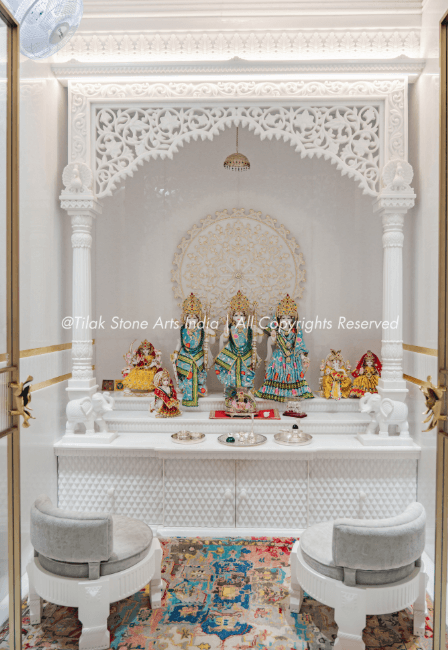
A mandir for the home does more than occupy a corner. It quietly sets the emotional tone of the entire living space, influencing how people begin and end their day. When design is intentional, the mandir becomes a steady anchor that supports focus, calm, and a sense of continuity within everyday routines.
A well-crafted mandir for the home brings structure to both space and behaviour, turning daily rituals into grounding experiences that align with the household’s pace. This is not about decoration alone. It is about creating a place that supports stillness, reflection, and meaningful engagement, while also fitting naturally into the design language of the home.
When A Mandir Shapes The Entire Environment
The Mandir Extends Beyond Its Physical Area: A mandir for the home influences how surrounding spaces feel because it introduces a focal point tied to intention and routine. When placed thoughtfully, it guides movement, lighting choices, and furniture layout, subtly organising the environment without overt structural changes.
Delay Reduces Spatial Coherence Over Time: When a mandir is treated as an afterthought, the home often lacks a defined centre of calm. In everyday design practice, professionals observe that spaces without intentional focal points tend to feel fragmented, making it harder to establish routines that support emotional balance and consistency.
The Link Between Design And Inner Calm
Spiritual Design Reinforces Mental Clarity: Thoughtful placement and symmetry within a mandir help create visual harmony, which reduces distractions and allows the mind to settle. This balance is essential in homes where multiple functions coexist, as it provides a clear and calming visual anchor.
Material Choice Affects Sensory Experience: The use of White Vietnam marble is considered ideal because of its refined finish, durability, and natural purity. It supports a sense of positive energy by reflecting light softly and maintaining a clean, serene appearance that enhances the spiritual atmosphere of the space.
Proportion Material And Placement Define Experience
Correct Proportions Improve Usability And Presence: A mandir for the home must be scaled to its surroundings to maintain balance. Oversized structures can dominate the room, while undersized ones lose significance. Proper proportions ensure the mandir feels present without disrupting the overall spatial flow.
Placement Determines Daily Interaction Patterns: The positioning of a mandir directly affects how often it is used. A mandir for the home placed in an accessible yet peaceful area encourages regular engagement, while poor placement can lead to neglect and reduced connection with daily rituals.
Designed Mandirs Become Part Of Everyday Living
Integration Encourages Regular Engagement: A mandir for the home becomes meaningful when it blends into daily routines rather than standing apart. When the design aligns with the home’s layout and lifestyle, it naturally becomes a part of everyday living instead of a separate or occasional feature.
Neglect Leads To Reduced Long Term Value: When design and placement are rushed, the mandir may lose relevance over time. In practical observation, households that invest in thoughtful design maintain stronger daily rituals, while poorly integrated mandirs often fade into occasional use, limiting both functional and emotional returns.
Comparing Ready Made And Custom Mandirs
Custom Designs Align With Real Living Needs: A mandir for the home that is tailored to space and lifestyle supports better usability than generic units. Customisation allows alignment with layout, lighting, and personal practices, making the mandir easier to use and maintain over time.
Standard Options Offer Convenience But Limit Fit: Ready made mandirs can be quicker to install, though they often compromise on proportion and integration. This can affect usability and long term satisfaction, particularly in homes where space planning and aesthetic cohesion play a central role.
Long Term Value Of Intentional Mandir Design
Durability Preserves Function And Meaning: A mandir for the home built with high quality materials and thoughtful craftsmanship maintains its structure and usability over time. This ensures that the space continues to support daily rituals without requiring frequent adjustments or replacements.
Consistency Strengthens Emotional Connection: When the mandir remains stable in design and placement, it reinforces routine and familiarity. This consistency helps establish habits that contribute to emotional grounding, making the mandir an enduring part of the home’s identity.
Key Considerations Before Choosing A Mandir For Home
Important Factors That Shape The Right Choice: A mandir for the home should be evaluated carefully to ensure it supports both design and function.
- The size should match the room’s scale so the mandir feels balanced rather than intrusive.
- Placement should allow regular use without interfering with daily movement.
- Material quality should support durability and easy maintenance.
- Design should align with the overall interior theme for consistency.
- Storage and accessibility should accommodate practical ritual needs.
See also: Low-Code Platforms for Business Innovation
Frequently Asked Questions
What is the ideal placement for a mandir for home
The ideal placement allows easy access while maintaining a sense of calm and separation from high traffic areas. Positioning the mandir in a quiet, well-lit part of the home supports consistent use and helps preserve its role as a focused spiritual space.
How does material impact the effectiveness of a mandir
Material affects both durability and sensory experience. High quality materials create a stable and refined presence, which supports long term usability. Smooth finishes and balanced tones also contribute to a calming environment that enhances daily engagement.
Is a custom mandir better than a ready made one
A custom mandir offers better alignment with space, layout, and personal practices. It ensures proper proportions and integration, which improves both functionality and visual appeal. Ready made options can be convenient but may not fully meet specific spatial or aesthetic needs.
How often should a mandir design be updated
A well designed mandir does not require frequent updates. When built with durable materials and thoughtful planning, it remains relevant for years. Minor adjustments in décor or lighting may be sufficient to keep the space aligned with evolving preferences.
Designing A Mandir That Truly Belongs In Your Home
A mandir for the home works best when it supports routine, reinforces calm, and integrates naturally with the space. Ignoring design and placement often leads to underuse and missed value. Choosing a thoughtfully crafted solution ensures lasting relevance and meaningful daily engagement. Take the next step by exploring options and booking a consultation to create a mandir that fits your home with purpose.
