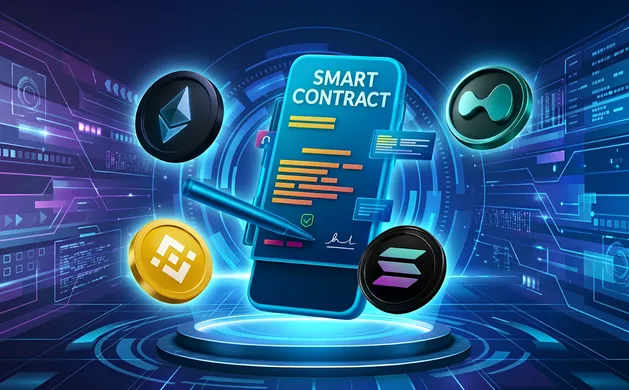
Audits begin with scoping and threat modeling to define objectives, boundaries, and responsibilities. Auditors map relevant contracts and environments, then prioritize risks. They enumerate common vulnerabilities such as reentrancy, access-control gaps, arithmetic issues, token standard gaps, and oracle risks before verification. The process progresses through testing, unit and integration scenarios, and, where possible, formal checks. Remediation evidence, traceable patches, and clear reports support reproducible validation, but the path to secure contracts remains nuanced and requires ongoing attention.
How Audits Start: Scoping and Threat Modeling
Audits begin with a clear definition of scope and the identification of potential threats. In this phase, the team maps objectives, boundaries, and responsibilities, enabling transparent assessment.
Threat modeling emerges as a two word discussion idea that guides risk prioritization, while scope definition anchors the process to applicable contracts and environments. This structured approach fosters honest, freedom‑embracing evaluation without assumptions.
What Auditors Look For: Common Vulnerabilities and Findings
In this phase, the audit team moves from framing scope and threat considerations to identifying concrete weaknesses that commonly compromise smart contracts. Auditors catalog issues such as reentrancy patterns, access control gaps, and arithmetic overflows, detailing impact and likelihood. They stress token standards alignment and oracle risks, prioritizing fixes that preserve functionality while reducing attack surface and maintaining architectural integrity.
See also: Low-Code Platforms for Business Innovation
How Verification and Testing Prove Security
Verification and testing establish confidence by systematically challenging a contract’s behavior under defined conditions.
Verification and testing prove security through structured approaches: unit tests, integration checks, and scenario analyses that reveal edge cases and unintended states.
They address scaling concerns, ensuring efficiency and resilience at scale.
Formal verification complements this by mathematically proving core properties, strengthening assurance beyond conventional testing.
Remediation, Evidence, and Report Quality
The process emphasizes remediation evidence, ensuring traceable change logs and verifiable patch timing.
Report quality findings are summarized with clarity, enabling stakeholders to assess risk, reproduce results, and validate security posture without ambiguity, fostering disciplined improvement and organizational freedom.
Frequently Asked Questions
How Do Auditors Establish the Audit Scope for Ongoing Projects?
Auditors establish the audit scope for ongoing projects by defining criteria, risk priorities, and resource constraints; it begins with scope definition, followed by stakeholder communication to align expectations, timelines, and verification procedures for transparent, collaborative progress.
What Legal Liabilities Arise From Insecure Smart Contracts?
In a satirical frame, one notes that insecure smart contracts incur liability for developers and issuers; they face potential civil, regulatory, and consumer claims. The risk hinges on incentive alignment and regulatory compliance guiding responsible deployment.
How Is Economic Risk Quantified During a Review?
Economic risk is quantified by mapping potential loss from vulnerabilities within the audit scope, considering likelihood, exposure, and impact; the audit scope defines asset boundaries, scenarios, and controls, enabling systematic, transparent, and defendable risk monetization for stakeholders.
Which Governance Practices Support Post-Audit Security?
Audits illuminate a lighthouse, guiding governance oversight through post-audit security measures. They align with risk appetite, establishing continuous monitoring, transparent change-management, independent reviews, formal incident response, and community-driven decision chains to sustain resilient, freedom-friendly blockchain governance.
How Are Third-Party Libraries and Dependencies Evaluated?
Third party libraries and dependency evaluation are conducted via quantitative assessment within ongoing project scope and audit scope, addressing post audit security, governance practices, economic risk, legal liabilities, and insecure contracts to mitigate risk.
Conclusion
Audits begin with disciplined scoping and threat modeling, anchoring the process to specific contracts and environments. By outlining objectives, boundaries, and responsibilities, auditors establish a transparent, repeatable framework. They systematically identify vulnerabilities—reentrancy, access-controls gaps, arithmetic issues, token-standard gaps, and oracle risks—before formal verification and rigorous testing. Through remediation evidence, traceable patches, and detailed reporting, the practice yields reproducible validation and continuous improvement, confirming that security is not an afterthought but an integral, verifiable property of smart contracts.
