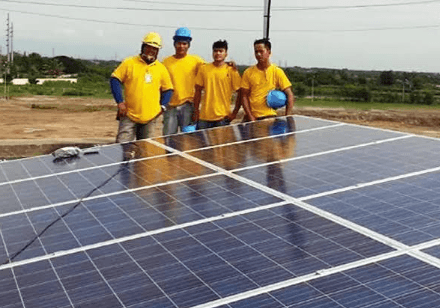
Solar adoption in the Philippines has moved past the early-adopter stage. Property developers, manufacturing plants, and even mid-sized retail chains are now factoring photovoltaic systems into their long-term energy strategy rather than treating them as an experimental add-on. As demand has grown, so has the number of top PV companies buyers in the Philippines can choose from, which has made the selection process both more competitive and, in some ways, more confusing.
The Shift From Early Adoption to Mainstream Demand
A decade ago, solar installations in the Philippines were largely limited to pilot projects or premium residential homes with the budget to experiment. Today, the economics have changed. Grid electricity rates in many parts of the country remain among the highest in the region, and payback periods for well-designed solar systems have shortened considerably as panel prices have dropped and efficiency has improved.
This shift has pulled in a wider range of buyers, from small business owners looking to cut operating costs to large industrial facilities aiming to hedge against future tariff increases. With that broader buyer base has come a corresponding expansion in the number of companies competing for their business.
Not All PV Companies Operate the Same Way
It is worth understanding that the term “PV company” can mean different things depending on where a business sits in the supply chain. Some are manufacturers producing panels and related hardware directly. Others are distributors or system integrators who source components from multiple manufacturers and assemble complete installation packages. A smaller number handle everything from design and procurement through to installation and long-term maintenance.
For buyers, understanding which category a company falls into matters because it affects accountability. A pure distributor may offer competitive pricing but limited technical support if a fault develops, while a full-service integrator typically charges more but takes responsibility for the entire system’s performance.
Evaluating Track Record and Project Scale
One of the more reliable indicators of a company’s capability is the scale and diversity of projects it has previously completed. A company that has only handled small residential rooftops may struggle with the technical demands of a large commercial rooftop or ground-mounted installation, where structural load calculations, grid interconnection requirements, and inverter sizing become considerably more complex.
Buyers evaluating options often find it useful to consult curated comparisons that summarize company backgrounds, certifications, and areas of specialization side by side. A resource covering leading top PV companies Philippines developers frequently reference offers exactly this kind of overview, making it easier to shortlist candidates before requesting formal quotations.
Certification and Compliance Should Not Be an Afterthought
The Philippines has specific regulatory requirements governing grid-tied solar installations, including net metering rules administered through local distribution utilities. A company unfamiliar with these processes can cause significant delays, even if the physical installation itself goes smoothly. Buyers should confirm that any prospective company has direct experience navigating utility approvals in the specific region where the project will be located, since requirements can differ between distribution utilities.
Weighing Cost Against Long-Term Value
Price comparisons between PV companies can be misleading if they are not adjusted for what is actually included. A lower quote might exclude structural reinforcement, permitting assistance, or post-installation monitoring, all of which add real cost later if handled separately. Requesting itemized quotations rather than lump-sum figures makes it much easier to compare offers on an equal footing.
Frequently Asked Questions
Should I choose a manufacturer directly or go through a system integrator?
It depends on project complexity. Straightforward residential installations can work well with either approach, but larger commercial projects generally benefit from an integrator who can manage the full scope of work.
See also: Functionality of Fumed Silica: Understanding Its Role in Advanced Industrial Applications
How important is after-sales monitoring for a solar investment?
Very important. Systems that include remote performance monitoring make it far easier to catch underperformance or faults early, before they significantly affect energy output.
Do all PV companies handle utility interconnection paperwork?
No, this varies by company. It is worth confirming this specifically before signing a contract, as handling it independently can be time-consuming for buyers unfamiliar with the process.
Final Thoughts
With so many companies now competing in the Philippine solar market, doing thorough due diligence before committing to a provider is no longer optional. Comparing track records, certifications, and the actual scope of services included can make the difference between a smooth installation and a costly, drawn-out one.
