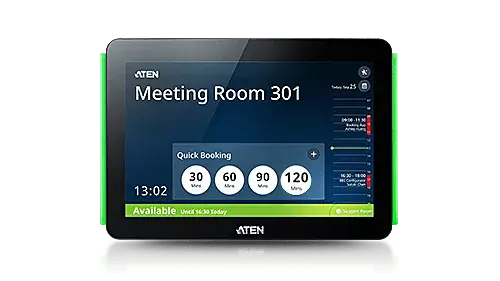
Walking down a corridor only to find every meeting room either occupied or, worse, sitting empty despite showing as “booked” on a whiteboard schedule, represents one of the more common and avoidable frustrations of modern office life, and it’s precisely this everyday friction that a proper room booking system is designed to eliminate.
The Hidden Cost of Manual Room Scheduling
Many offices still rely on informal methods for managing meeting room availability, whether shared spreadsheets, physical sign-up sheets, or simply verbal coordination between colleagues, approaches that inevitably lead to double bookings, forgotten reservations, and wasted time as employees wander the office searching for an available space.
What a Room Booking System Actually Solves
A proper room booking system centralizes all meeting room availability into a single, easily accessible platform, allowing employees to instantly see which spaces are free, reserve them with a few clicks, and trust that their booking will be honored without the risk of another team claiming the same room at the same time.
Reducing Wasted Time Across the Organization
The cumulative time employees spend searching for available meeting spaces, resolving scheduling conflicts, or simply confirming whether a room is actually free adds up considerably across an organization, and eliminating this friction through automated booking represents a genuine, measurable productivity improvement.
Improving Visibility Into Space Utilization
Beyond simplifying the booking process itself, these systems typically provide valuable data about how meeting spaces actually get used throughout the organization, information that facilities teams can use to make more informed decisions about space allocation and future office design.
Supporting Hybrid and Flexible Work Arrangements
As more organizations adopt hybrid work models with fluctuating in-office attendance, having clear, real-time visibility into available meeting spaces becomes even more valuable, helping teams coordinate in-person collaboration time more effectively despite less predictable office occupancy patterns.
Integration With Existing Workplace Tools
Modern room booking platforms typically integrate with calendar and communication tools employees already use daily, meaning adoption doesn’t require learning an entirely separate, disconnected system but instead fits naturally into existing workflows.
Reducing Administrative Burden on Office Staff
Without an automated system, office administrators or facilities staff often end up manually fielding room booking requests and resolving conflicts, a time-consuming responsibility that a proper booking system largely eliminates, freeing this staff time for more valuable work.
See also: Low-Code Platforms for Business Innovation
Making the Case for Implementation
Given the cumulative productivity, visibility, and administrative benefits involved, organizations still relying on manual room scheduling methods have genuine reason to consider whether implementing a dedicated booking system would meaningfully improve their day-to-day office operations.
Conclusion
A room booking system addresses genuine, everyday friction points in office operations, from reducing wasted employee time searching for available spaces to providing valuable utilization data supporting smarter facilities decisions. Organizations still relying on manual scheduling methods have clear, practical reasons to consider this kind of upgrade.
FAQs
Q1: What problems does a room booking system solve compared to manual scheduling? It eliminates double bookings, forgotten reservations, and the wasted time employees spend searching for available meeting spaces or resolving scheduling conflicts manually.
Q2: How does a room booking system support hybrid work arrangements? It provides clear, real-time visibility into available meeting spaces, helping teams coordinate in-person collaboration time more effectively despite less predictable office occupancy patterns.
Q3: Does implementing a room booking system require learning an entirely new workflow? Not typically; modern platforms usually integrate with calendar and communication tools employees already use daily, fitting naturally into existing workflows.
